
When a nor'easter takes the power out, the first question is whether the fireplace will still run. The answer depends on your ignition system. Here is how to tell which one you have, how to light it by hand, and how gas, wood, pellet and electric fireplaces compare when the lights go out.
Yes, if it has a standing pilot. A gas fireplace with a standing pilot (millivolt) ignition runs on the heat of its own pilot flame and works normally in a power outage. A gas fireplace with electronic ignition needs power to light the pilot and only works in an outage if it has a battery backup. In both cases the blower fan will not run, so the fireplace heats by radiant heat alone. Wood stoves work with no electricity at all. Pellet and electric fireplaces do not.
Every gas fireplace needs a pilot flame to light the main burner. What matters in an outage is what lights the pilot.
Works without electricity.
Needs house power or a battery backup.
Either way, the blower is off. The fan that pushes warm air into the room runs on a standard outlet. Without it the fireplace still produces the same amount of heat, but it spreads through the room by radiant heat and natural convection, so it feels gentler and more concentrated near the fireplace.
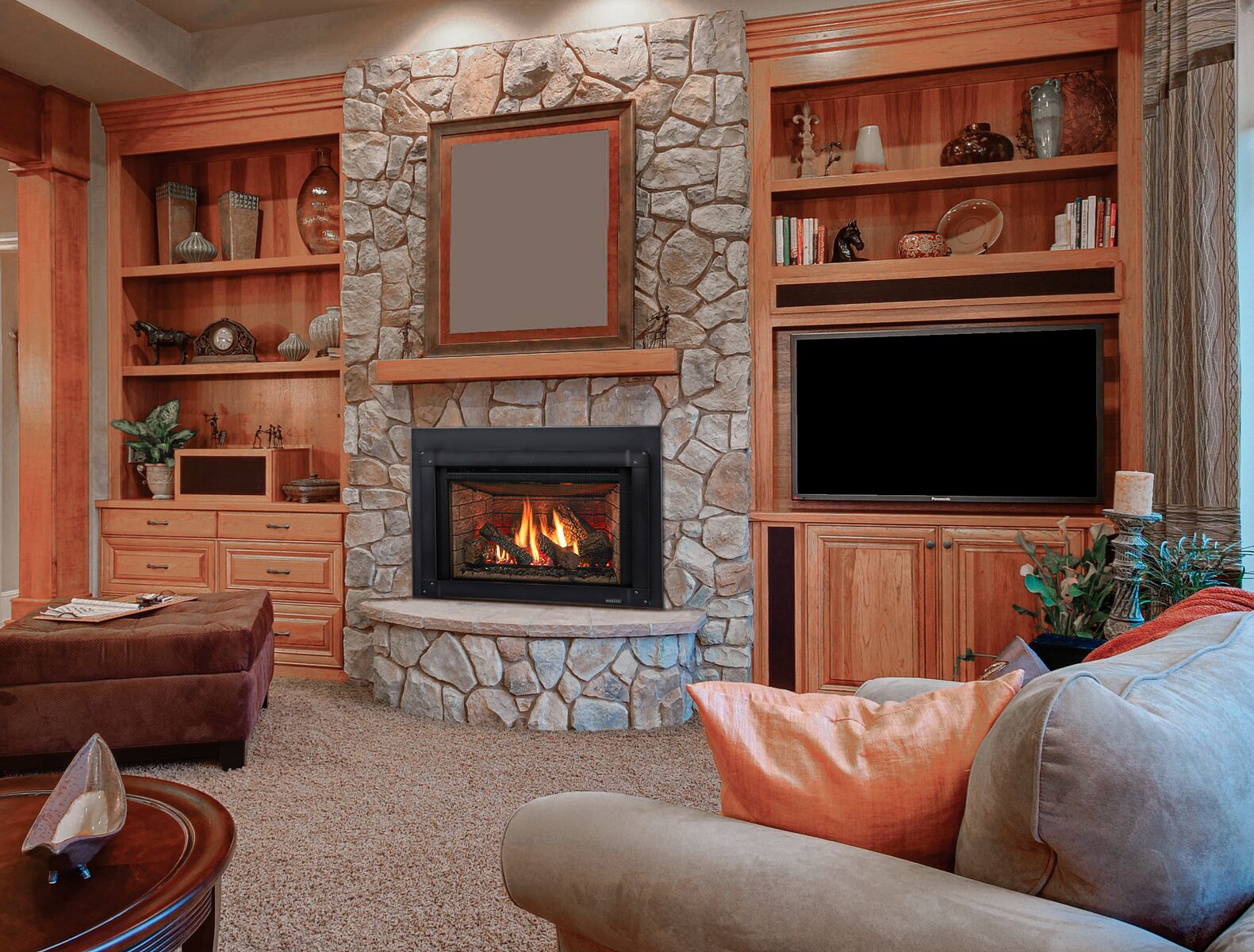
Not sure what you are looking at? Send us the make and model and we will tell you.
If your fireplace has a standing pilot and it happens to be out, here is the manual lighting sequence. These steps are for standing pilot systems only.
Turn the control knob from Off to Pilot, press it in and hold. Gas now flows to the pilot only.
While holding the knob, press the igniter button until the pilot lights. Several presses are normal after a long idle period.
Keep the knob pressed about 30 seconds so the thermocouple warms up. Release, confirm the pilot stays lit, then turn the knob to On and use the switch or remote.
Turn the knob to Off and call for service. Do not keep retrying, and never try to light an electronic ignition fireplace with a match or lighter.
Full instructions for every ignition type are in our guide, How to Start a Fire in a Fireplace.
In a New England winter, the right fireplace or stove keeps one room warm through an outage. The time to find out which kind you have is before the storm.
Lights and burns normally. Blower off, so heat is radiant only.
Works if the backup compartment has fresh batteries. Otherwise waits for power.
No electricity involved at all. The most dependable backup heat there is.
Pellet stoves need power for the auger and fans. Electric fireplaces are fully dependent on house power.
| Fireplace Type | Runs in an Outage? | What Still Works | What Does Not |
|---|---|---|---|
| Gas, standing pilot | Yes | Pilot, main burner, wall switch, battery remote, thermostat | Blower fan, accent lighting |
| Gas, electronic ignition with battery backup | Yes | Pilot, main burner, remote | Blower fan, accent lighting |
| Gas, electronic ignition, no backup | No | Nothing until power returns | Everything |
| Wood stove or wood fireplace | Yes | Everything except an optional blower | Blower fan |
| Pellet stove | Only with a UPS, battery backup or generator | Nothing on its own | Auger, combustion fan, convection fan |
| Electric fireplace | No | Nothing | Flame effect and heater |

Figure out whether you have a standing pilot or electronic ignition now, not with a flashlight in your teeth during a storm.
If your fireplace has electronic ignition, confirm it has a backup compartment and put fresh batteries in it each fall. Many units can have a backup kit added.
A pilot that is dirty or a thermocouple that is weak will fail exactly when you need it. Annual service catches that before winter.
For homeowners who lose power often, a wood stove is the one heat source that needs nothing but firewood.
We can confirm your ignition type, test the pilot and thermocouple, add a battery backup where the model allows it, and make sure the fireplace lights when you need it most. Serving Canton, MA and the Greater Boston area.
Step-by-step lighting for every gas ignition type, plus wood stoves and fireplaces.
Pilot lights, thermocouples, valves, ignition modules and battery backup kits.
Backup heat that needs no electricity. Vermont Castings, Jøtul and Hearthstone stoves installed.
Many do. A gas fireplace with a standing pilot (millivolt) ignition system runs entirely on the heat of its own pilot flame and will light and burn normally during a power outage. A gas fireplace with electronic intermittent pilot ignition (IPI) needs power to spark the pilot, so it will only work in an outage if it has a battery backup. In both cases the blower fan, which runs on house power, will not operate, so the fireplace heats by radiant heat and natural convection only.
Look at the fireplace when it is off. A standing pilot system has a small blue flame burning constantly behind the glass, and the control valve has an Off / Pilot / On knob with a red or black igniter button. An electronic ignition system has no flame when the unit is off; the pilot lights itself each time you turn the fireplace on with a wall switch or remote, often with a clicking sound. Your owner's manual will also list the ignition type.
If it has a standing pilot, yes. Turn the knob to Pilot, press and hold it while pressing the igniter button until the pilot lights, hold for about 30 seconds, then turn the knob to On. If it has electronic ignition with a battery backup, install fresh batteries in the backup compartment (usually under the firebox or behind the lower louver) and operate it normally. If it has electronic ignition and no battery backup, do not attempt to light it with a match or lighter. Call us about adding a battery backup kit.
A wall switch on a standing pilot (millivolt) fireplace still works because it carries a tiny current generated by the pilot's thermopile, not house power. A remote with its own batteries also works on a millivolt system. On an electronic ignition system, the control module needs either house power or a battery backup for the switch or remote to do anything.
A direct-vent gas fireplace is sealed from the room and vents outside, so it is safe to run in an outage the same way it is any other day. Keep flammable items well away from the glass, which gets very hot, and make sure your carbon monoxide detector has working batteries. Never bring an outdoor propane heater, grill or generator inside for heat.
Yes, completely. A wood stove or wood-burning fireplace needs no electricity at all, which is why many New England homeowners keep one as a backup heat source. The only exception is an optional blower fan, which will not run in an outage. The stove still heats by radiation and convection without it.
No, not on its own. A pellet stove uses electricity to run the auger that feeds pellets, the combustion fan and the convection blower. Without power it shuts down. Some models accept a battery backup or a small uninterruptible power supply that will keep the stove running for several hours, and a generator can power a pellet stove through a longer outage.
No. An electric fireplace is entirely dependent on house power for both the flame effect and the heater. If backup heat during outages is a priority, a standing pilot gas fireplace, a gas fireplace with battery backup, or a wood stove is the better choice.
Send us a message about your fireplace and someone from our team will get back to you shortly. For urgent service, please call directly.


