
Transform the fireplace you already have into one you'll actually use. We convert wood-burning fireplaces to gas throughout Canton and the Greater Boston area — with professional installation, chimney venting, and full permit coordination from start to finish.
A traditional wood-burning fireplace has undeniable charm — but for most homeowners, the day-to-day reality is different. Hauling and storing firewood, cleaning ash after every use, sweeping the chimney annually, and losing 80% of the heat straight up the flue. That's why many Canton-area homeowners choose to convert their existing wood fireplaces to gas.
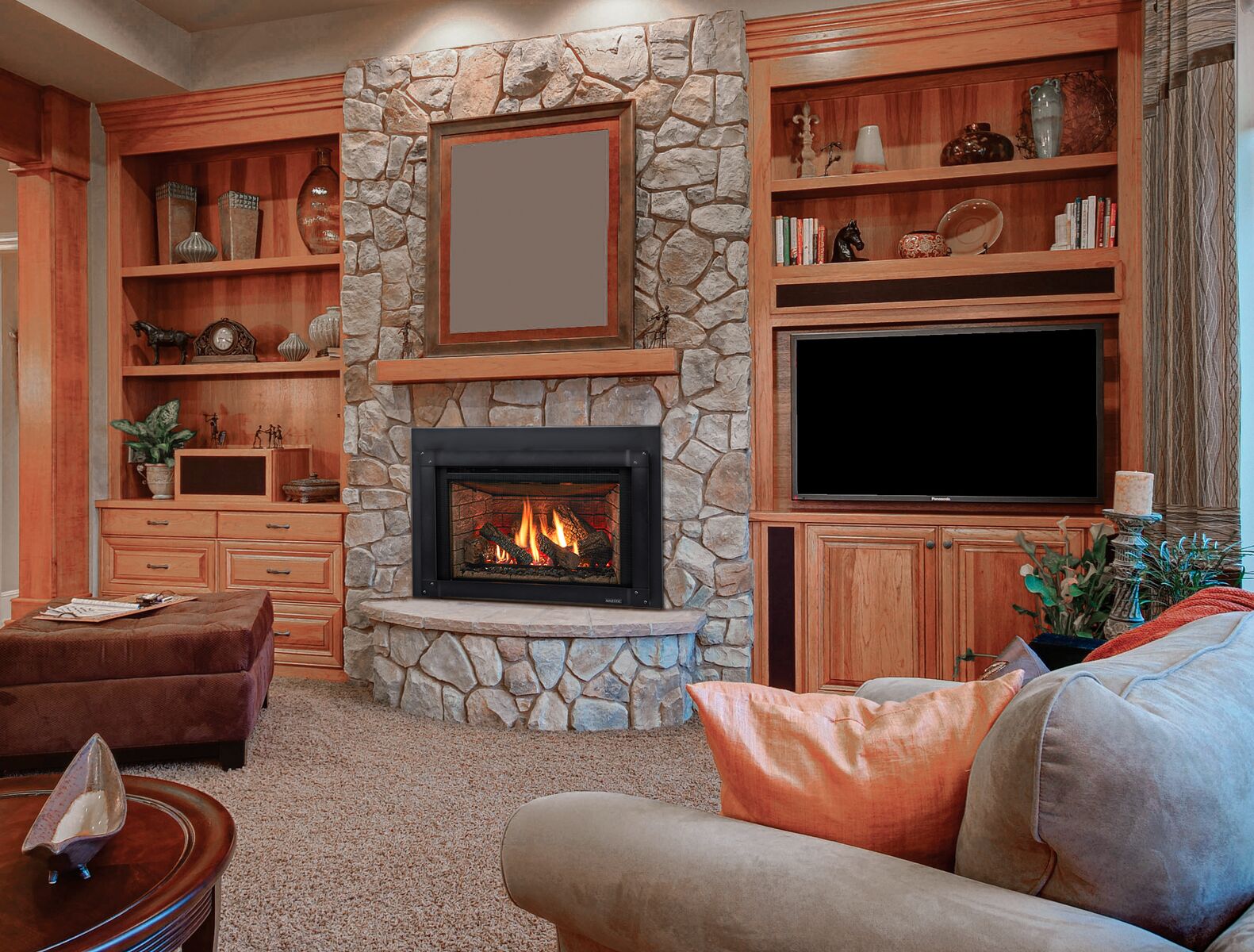
A wood-to-gas conversion transforms the fireplace opening you already have into a clean, efficient, remote-controlled gas fireplace or insert. No new construction, no relocating the hearth — just a modern appliance in the space where your old one used to be. Whether you want a fully sealed high-efficiency gas insert or a simple decorative gas log set, we handle every step from evaluation through final safety testing.
Every conversion follows the same six-step process, designed to protect your home, meet Massachusetts code, and deliver a fireplace that runs safely and efficiently from day one.
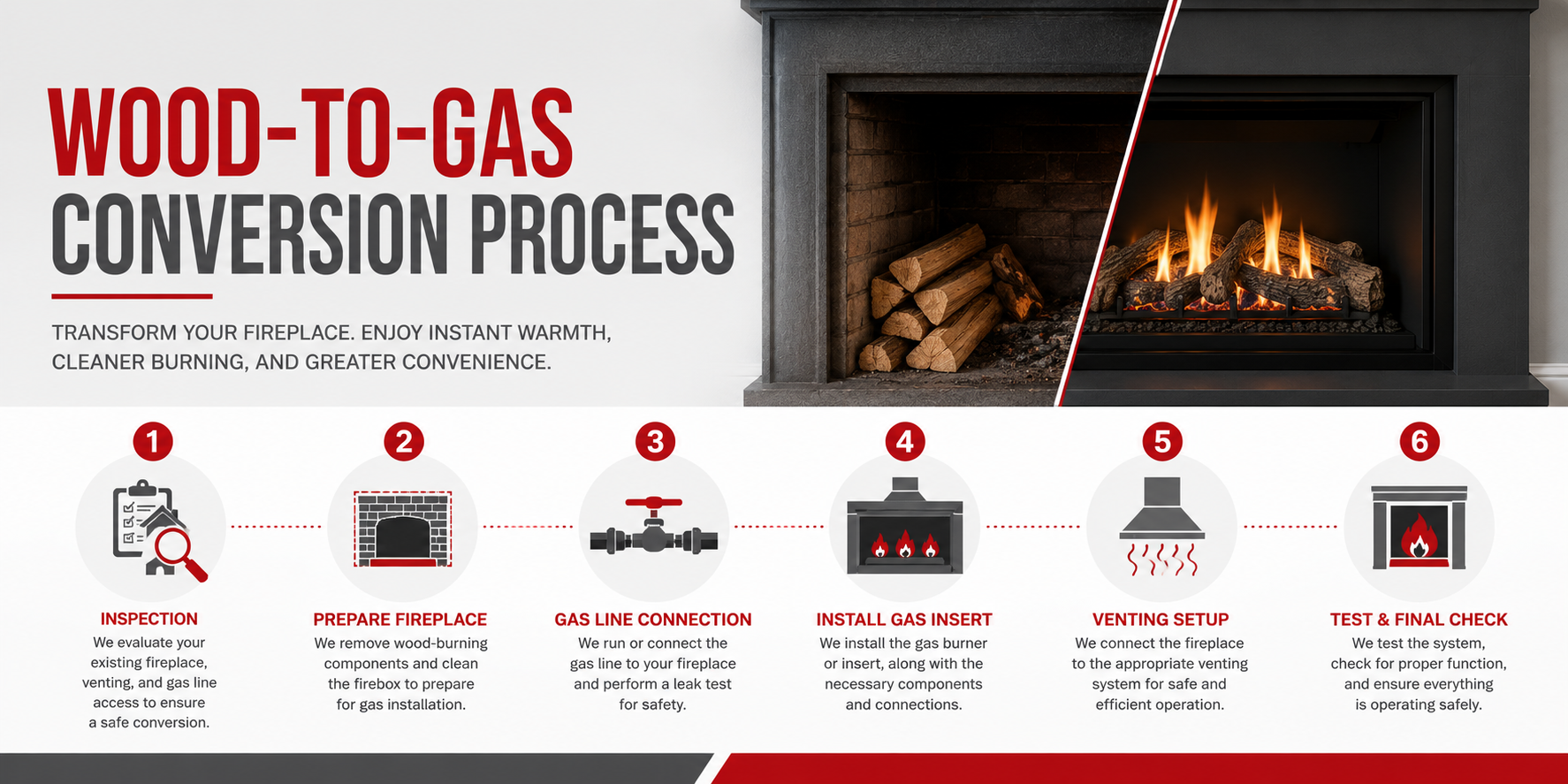
We evaluate the existing fireplace, chimney, and gas line access to confirm a safe, code-compliant conversion path.
We remove wood-burning components (grate, damper, remnants of use) and clean the firebox to prepare for gas installation.
A licensed technician runs or connects the gas line to the fireplace and performs pressure and leak testing.
We install the gas burner or insert along with all necessary components — thermocouple, valve, ignition module, and any blowers or fans.
The unit is connected to the appropriate venting — typically a stainless steel liner through the existing chimney for direct-vent inserts, or the existing flue for vented log sets.
We complete final safety testing, verify all controls are functioning, and confirm the system meets manufacturer specifications and Massachusetts code.
The single biggest choice in a wood-to-gas conversion is whether to install a sealed gas insert or a gas log set. They look similar to the untrained eye, but they perform very differently. Here's the honest comparison.
A sealed, self-contained gas heater installed inside your existing firebox. Features a glass front, dedicated venting, and often a built-in blower.
A gas burner and ceramic logs placed in your existing open firebox. Maintains the appearance of an open hearth — but not sealed.
An open wood-burning fireplace sends 80–90% of its heat straight up the chimney. A modern sealed gas insert captures nearly all of it and delivers it into the room. That's not a marketing claim — it's the physics of sealed combustion versus open-hearth drafting.
Efficiency figures reflect industry-standard ranges for direct-vent EPA-tested gas inserts and traditional open masonry fireplaces. Actual performance varies by model, installation, and operating conditions.
Every dollar you spend heating the room with an open wood fireplace, roughly 80 cents of that heat leaves your house via the chimney. Convert to a sealed gas insert, and the ratio flips: nearly all of the heat energy stays in your living space. For homeowners who want a fireplace to actually contribute to the home's heating rather than fight against it, the conversion is one of the highest-impact upgrades available.
Instant fires. Zero ash. Real heat. Modern gas conversion transforms an ornament into an appliance.
The highest-efficiency conversion path. A sealed insert drops into your existing firebox, connects to a new stainless steel liner through the chimney, and delivers 70–85% efficiency. Best for homeowners who want the fireplace to be a real heat source.

The simpler, faster conversion. A gas burner and decorative ceramic logs are installed directly in your existing open firebox. Maintains the open-hearth aesthetic, less involved install, but significantly less efficient than a sealed insert.
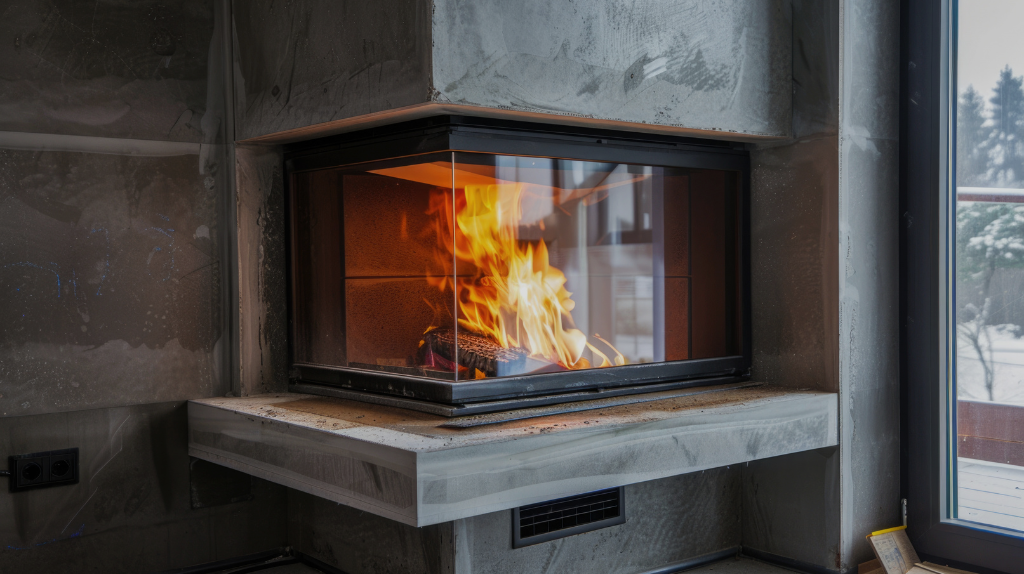
For major remodels. If you're already renovating the hearth or wall, a full custom gas fireplace lets you rethink the size, orientation, and finish of the entire fireplace assembly. More involved than a drop-in conversion, but a complete transformation.
Most existing wood-burning fireplaces can be converted to gas — but not all. Here's a straightforward look at what works and what doesn't. The final call is always made on-site during the initial inspection.
Traditional brick or stone open fireplaces with an existing chimney are the most common conversion candidates. Both inserts and log sets are compatible.
Metal factory-built fireplaces (also called "zero-clearance" units) can often be converted, provided the firebox is in sound condition and the manufacturer approves the conversion.
Freestanding wood stoves generally cannot be converted to gas. They are engineered for solid fuel combustion and are not compatible with gas burner assemblies. Replacement with a gas stove is the usual path instead.
Our team converts wood-burning fireplaces to gas throughout Canton and the surrounding South Shore and Greater Boston communities. If your town is not listed, give us a call — we may still cover your area.
Whether you're ready to install a high-efficiency gas insert or you just want to explore what's possible, New England Hearth & Home can walk you through the options and provide a clear scope of work for your specific fireplace. Reach out today.

Deep dive on gas, wood, pellet, and electric fireplace inserts — the core appliance behind most wood-to-gas conversions.
New gas fireplace installations, direct-vent systems, and full custom hearth builds for new construction and remodels.
If your fireplace is beyond conversion, explore full removal-and-replacement services for gas, electric, and wood units.
Most existing wood-burning fireplaces can be converted to gas. Standard masonry fireplaces and approved prefabricated (metal) fireboxes are usually compatible. Dedicated wood stoves generally cannot be converted to gas — they are engineered for solid fuel and their combustion chambers are not compatible with gas burners. During an on-site evaluation, we confirm firebox condition, chimney integrity, and gas line accessibility to identify the right conversion path for your specific unit.
A gas fireplace insert is a self-contained, sealed heating appliance that fits into your existing firebox with a glass front and its own venting system through the chimney. Inserts operate at 70–85% efficiency and are designed to be a real heat source. A gas log set is a burner and decorative ceramic logs placed directly in your existing open firebox. Gas log sets are primarily for ambiance — vented log sets lose most of their heat up the chimney, similar to an open wood fire. Inserts cost more up front but deliver dramatically more heat and efficiency.
For most homeowners, yes. A wood-to-gas conversion delivers instant fires with a remote or wall switch, eliminates ash cleanup and firewood storage, dramatically improves efficiency (a modern gas insert operates at 70–85% versus 10–20% for an open masonry fireplace), and reduces indoor air quality concerns from wood smoke. The main trade-offs are the up-front installation investment and the loss of the crackling sound and scent of a real wood fire.
A gas log set installation can often be completed in a few hours once the gas line is in place. A full gas insert conversion — including chimney inspection, liner installation, gas line connections, and unit installation — typically takes one to two days. Timelines can extend if the chimney requires repair, if a new gas line needs to be run from the utility connection, or if permits require inspection scheduling.
Total conversion scope depends on several factors: whether you choose a gas insert or a gas log set, the condition of your existing chimney and whether a new stainless steel liner is required, how far the gas line must be extended, whether electrical work is needed for a blower or ignition module, and local permit requirements. During an in-home consultation, we evaluate all of these factors and provide a detailed scope of work for your specific home.
Yes, in most Massachusetts municipalities a permit is required for wood-to-gas conversion because the project involves gas line work and chimney modifications. Permits typically require inspection by the local building or gas inspector after installation. We handle permit coordination as part of every conversion project and schedule the required inspections with the homeowner.
In most cases, yes. Modern direct-vent gas inserts require a properly sized stainless steel liner (or a coaxial dual-liner system) running from the insert up through the existing chimney. This ensures safe venting of combustion gases and, on direct-vent systems, provides an intake path for fresh combustion air. Gas log sets that use the existing open chimney flue may not require a new liner, but the chimney must still be inspected and cleaned before conversion.
No. Once a wood-burning fireplace is converted to gas — whether with a gas insert or a gas log set — you cannot burn real wood in it. Gas units are engineered for gas combustion only, and burning wood in them can cause soot buildup, damage to gas components, and create serious fire hazards. Homeowners who want the option to occasionally burn real wood typically install a gas insert in a secondary fireplace or opt for a wood-burning insert instead.
Yes, dramatically so. Modern gas fireplace inserts operate at 70–85% efficiency. Traditional open wood-burning fireplaces typically operate at only 10–20% efficiency, because most of the heat escapes up the chimney. Even wood-burning inserts — which are far more efficient than open hearths — usually operate in the 60–80% range. For homeowners looking to actually heat a space rather than lose heat up the chimney, a gas insert is the most efficient path forward.
Yes. We provide wood-to-gas fireplace conversion services for homeowners throughout Canton, MA and the Greater Boston area, including Milton, Sharon, Norwood, Stoughton, Randolph, Dedham, Norfolk, Westwood, Avon, Braintree, Walpole, Foxborough, and the surrounding South Shore communities.
Send us a message about your wood-to-gas conversion project and someone from our team will get back to you shortly. For urgent service, please call directly.


