A pellet stove gives you the look of a wood fire with the convenience of a thermostat. Here is what a pellet stove actually is, how it heats, the honest pros and cons, and how it compares to a traditional wood stove. Freestanding pellet stoves and pellet inserts are on display at our Canton, MA showroom.
A pellet stove is an automated wood-burning appliance. It burns compressed wood pellets fed from a hopper by an electric auger, lights itself, holds a set temperature with a thermostat, and vents through a small pipe that can go straight through a wall. It is the most convenient way to heat with wood, with two trade-offs: it needs electricity to run, and it needs regular cleaning.
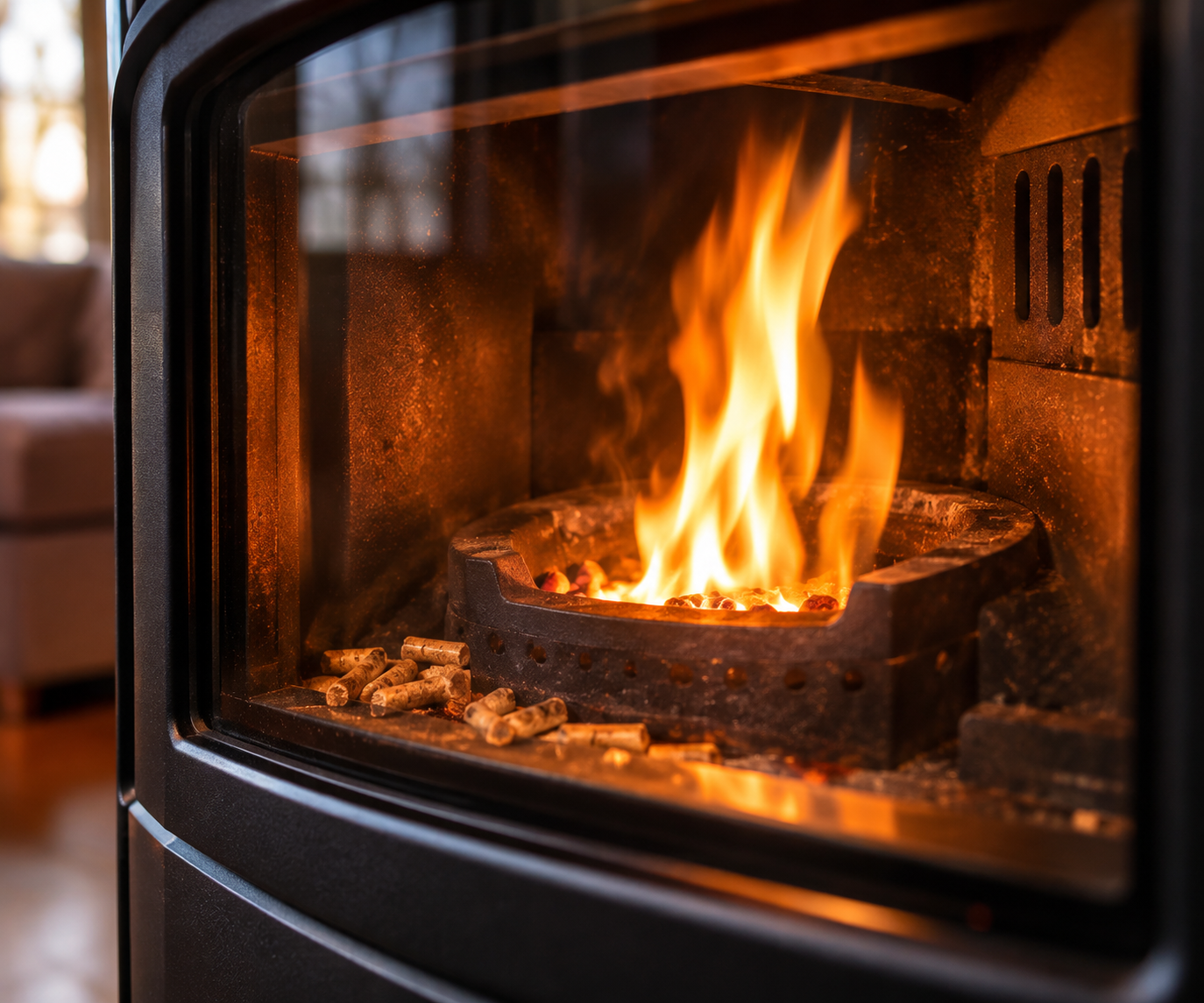
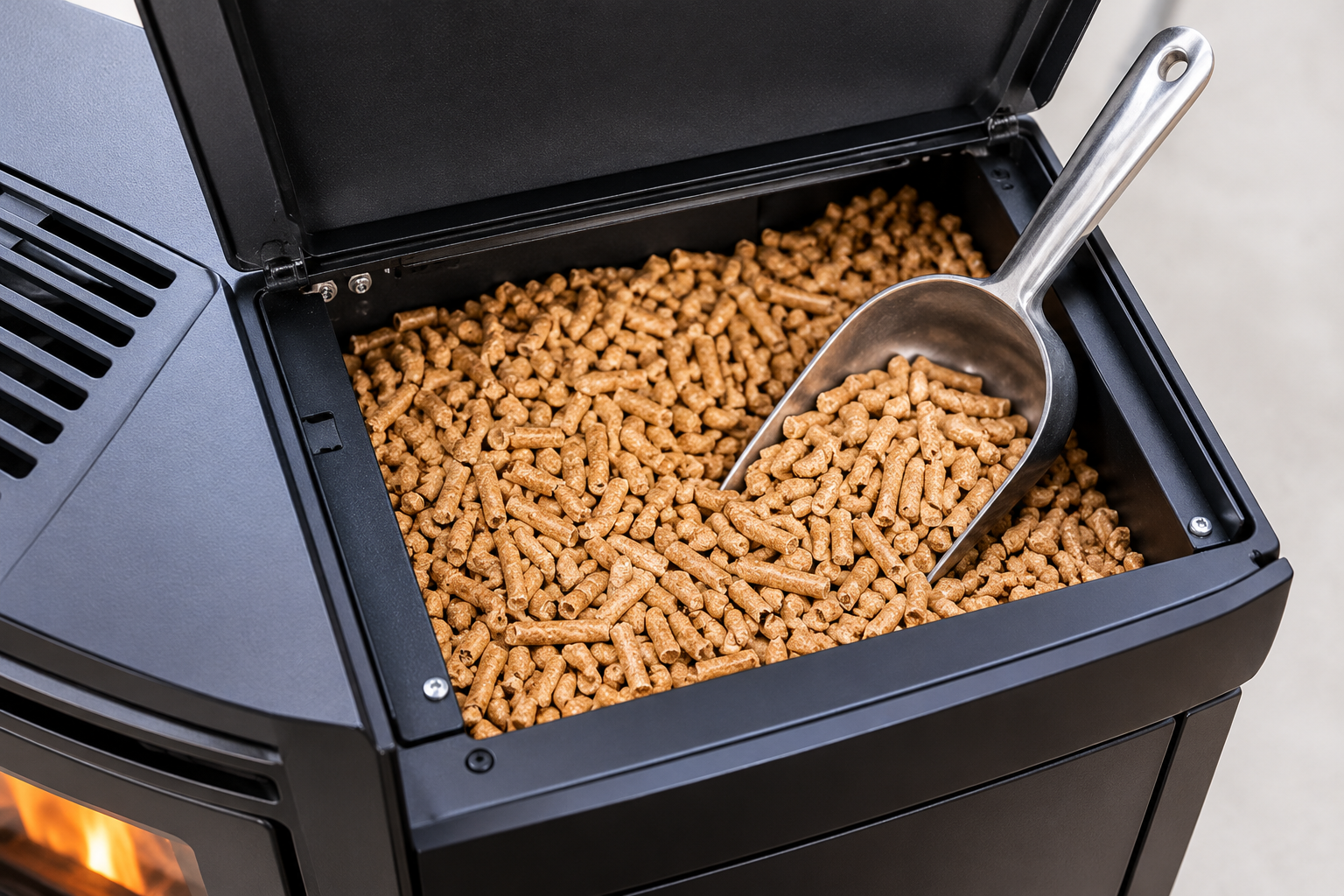
A pellet stove is a heating appliance that burns small, compressed wood pellets, about the size of rabbit feed, made from sawdust and wood waste. From across the room it looks like a wood stove: a steel or cast iron body with a glass door and a visible flame. Up close it works more like a furnace. Fuel is stored in a hopper, delivered automatically to a small burn pot, lit by an electric igniter, and controlled by a thermostat.
Because combustion is so controlled, pellet stoves burn cleaner than open fireplaces and most older wood stoves, with very little smoke, minimal creosote, and fine ash that collects in a pan. They come as freestanding stoves that sit on the floor and as inserts that slide into an existing fireplace opening.
Every pellet stove follows the same seven-step cycle, managed by a control board. Once you set a temperature, the stove handles the rest.
The one thing to understand before buying: steps two through six all rely on electric motors and fans. That is what makes a pellet stove so convenient, and it is also why it stops in a power outage.
Pour pellets into the hopper at the top or back of the stove. Depending on the model it holds enough fuel for roughly 12 to 40 hours of continuous burning.
A motorized screw called an auger carries pellets from the hopper and drops them into the burn pot in measured amounts.
When the thermostat calls for heat, an igniter heats the air around the burn pot and the pellets light on their own. No match, no kindling.
A combustion fan pulls in air for the fire and pushes exhaust out through a small sealed vent pipe, usually straight through an exterior wall.
A convection fan blows room air across a heat exchanger warmed by the fire and sends it back out into the living space.
The auger speeds up or slows down automatically to hold the temperature you set on the control panel or remote.
Fine ash falls through the burn pot into an ash pan at the bottom of the stove. Empty it every few days during heavy use.
Pellet stoves are a strong fit for a lot of New England homes and the wrong fit for some. Here is both sides, including the reasons some homeowners end up getting rid of theirs.
Fill the hopper, set the temperature, and let the stove run. That is the whole appeal of a pellet stove, and for the right home it is hard to beat.
Both burn wood. Beyond that, they are very different appliances. This is the comparison most homeowners are really asking about.
| Factor | Pellet Stove | Wood Stove |
|---|---|---|
| Fuel | Bagged compressed wood pellets | Seasoned split cordwood |
| Lighting | Automatic igniter | Kindling and a match |
| Heat control | Thermostat, auto-adjusting feed | Manual air control |
| Electricity | Required (battery backup optional) | None |
| Venting | Small sealed pipe, often through a side wall | Full Class A chimney through the roof |
| Smoke and creosote | Very low | Moderate; annual chimney care required |
| Daily upkeep | Scrape burn pot, empty ash pan | Load wood, remove ash |
| Noise | Low fan hum | Silent |
| Flame | Compact, mechanical | Full rolling fire |
| Works in a power outage | Only with backup power | Yes |
| Best for | Convenience, steady zone heat, homes without a chimney | Independence, ambiance, backup heat |
Rule of thumb: if your first priority is heat that keeps working when the power goes out, look at a wood stove. If your first priority is setting a temperature and forgetting about it, a pellet stove wins.
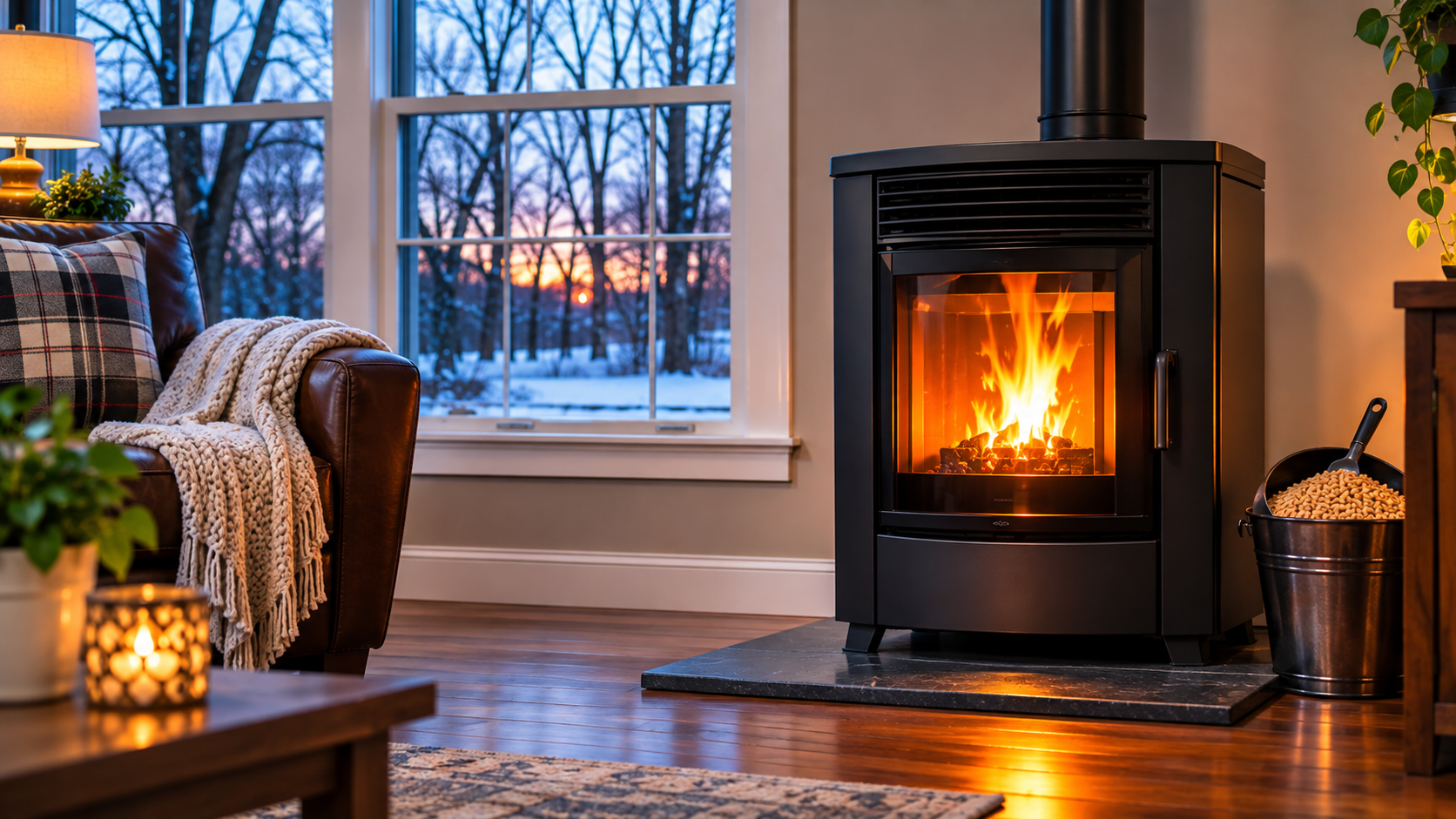
Sits on the floor on a hearth pad and vents through a nearby exterior wall or up through the roof. Works in almost any room, including homes with no fireplace at all. Larger hoppers and more model choices.
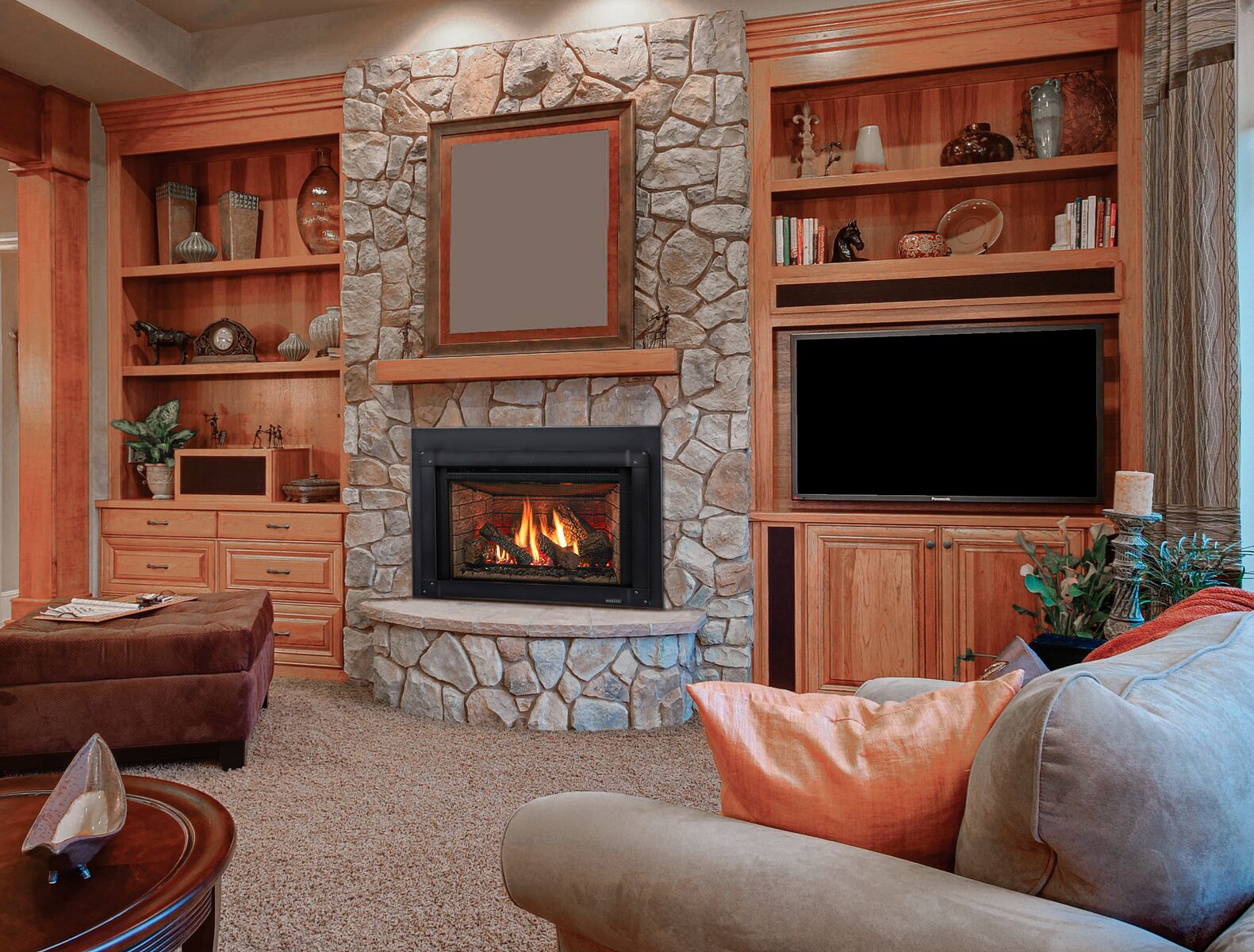
Slides into an existing masonry or factory-built fireplace and vents through a liner in the existing chimney. Turns a drafty open fireplace into an efficient, automated heater while keeping the fireplace as the room's focal point.
We sell pellet stoves and inserts from leading hearth manufacturers, display them in our Canton showroom, and handle everything after you choose one.
See freestanding stoves and inserts in person, compare hopper sizes and heat output, and talk through the right size for your space.
Hearth pad, venting through the wall or an existing chimney, electrical connection and setup, with permit coordination handled for you.
Deep cleaning of the burn pot, heat exchanger, ash traps and vent, plus inspection of the auger, igniter, fans and gaskets before each heating season.
Igniters, auger motors, combustion and convection fans, control boards, sensors and door gaskets. Every repair is quoted after inspection.
We sell, install and service pellet stoves for homeowners throughout Canton and the surrounding South Shore and Greater Boston communities. If your town is not listed, give us a call. We may still cover your area.
The best way to decide is to stand in front of one. Visit the showroom at 1049 Turnpike Street in Canton, or call and we will walk you through the options for your home and quote the installation.
Prefer heat that needs no electricity? Compare EPA-certified wood stoves and installation.
Gas, wood, pellet and electric inserts for an existing fireplace opening.
How gas, wood, pellet and electric fireplaces behave when the power goes out.
A pellet stove is a heating appliance that burns small compressed wood pellets instead of cordwood. It looks like a wood stove with a glass door, but it is an automated appliance: pellets are loaded into a hopper, an electric auger feeds them into a small burn pot, an igniter lights them, and fans move heat into the room and exhaust outside. Pellet stoves are available as freestanding units and as inserts that fit into an existing fireplace opening.
You fill the hopper with pellets. When the thermostat calls for heat, a motorized auger carries a measured amount of pellets into the burn pot, an igniter lights them, a combustion fan feeds the fire and pushes exhaust out through a small sealed vent pipe, and a convection fan blows room air across a heat exchanger and back into the room. The auger speeds up or slows down to hold the temperature you set. Ash drops into a pan that you empty periodically.
For many Massachusetts homeowners, yes. A pellet stove gives you thermostat-controlled, high-efficiency zone heat with far less daily effort than a wood stove, and it can usually be vented through a side wall instead of a full chimney. It is not the right fit if you lose power often and do not have a backup, if you do not want to handle bags of pellets and regular cleaning, or if you want the look of a rolling wood fire.
Pellet stoves need electricity to run the auger, igniter and fans, so they shut down in a power outage unless you have a battery backup or generator. The fans produce a constant low hum. The burn pot, ash pan and glass need regular cleaning, and the stove should be professionally serviced once a year. Pellets come in heavy bags that need dry storage. And the flame is smaller and more mechanical-looking than a wood fire.
A wood stove is simpler, silent, and works with no electricity, but it needs a full Class A chimney, seasoned cordwood, frequent ash removal and annual chimney care. A pellet stove is automated and thermostat-controlled, burns cleaner, and can vent through a wall, but it depends on electricity and has more parts to maintain. Choose wood for independence and ambiance; choose pellets for convenience and steady, hands-off heat.
Roughly 8 to 26 hours, depending on the heat setting. On low a stove burns about a pound and a half an hour, so a bag lasts about a day. On high it can burn around five pounds an hour and go through a bag in about eight hours. Colder weather, a drafty room and lower-quality pellets all shorten burn time.
Not on its own. The auger, igniter and fans all need power, so the stove shuts down in an outage. Some models accept a battery backup or small uninterruptible power supply that keeps the stove running for several hours, and a generator can run one through a longer outage. If backup heat during outages is your main goal, a wood stove is the better choice.
Yes. Modern pellet stoves are designed for continuous, unattended operation and will run as long as there are pellets in the hopper. Keep working smoke and carbon monoxide detectors, keep the burn pot and vent clear of ash, and follow the manufacturer's guidance for your model.
Pricing depends on the model, whether it is a freestanding stove or an insert, and the venting your home needs. We quote every pellet stove and installation after a showroom visit or an on-site evaluation. Call (781) 562-0771 or request a consultation and we will put together a clear quote.
Send us a message about pellet stoves and someone from our team will get back to you shortly. For urgent service, please call directly.


